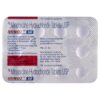
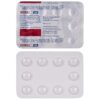
Description
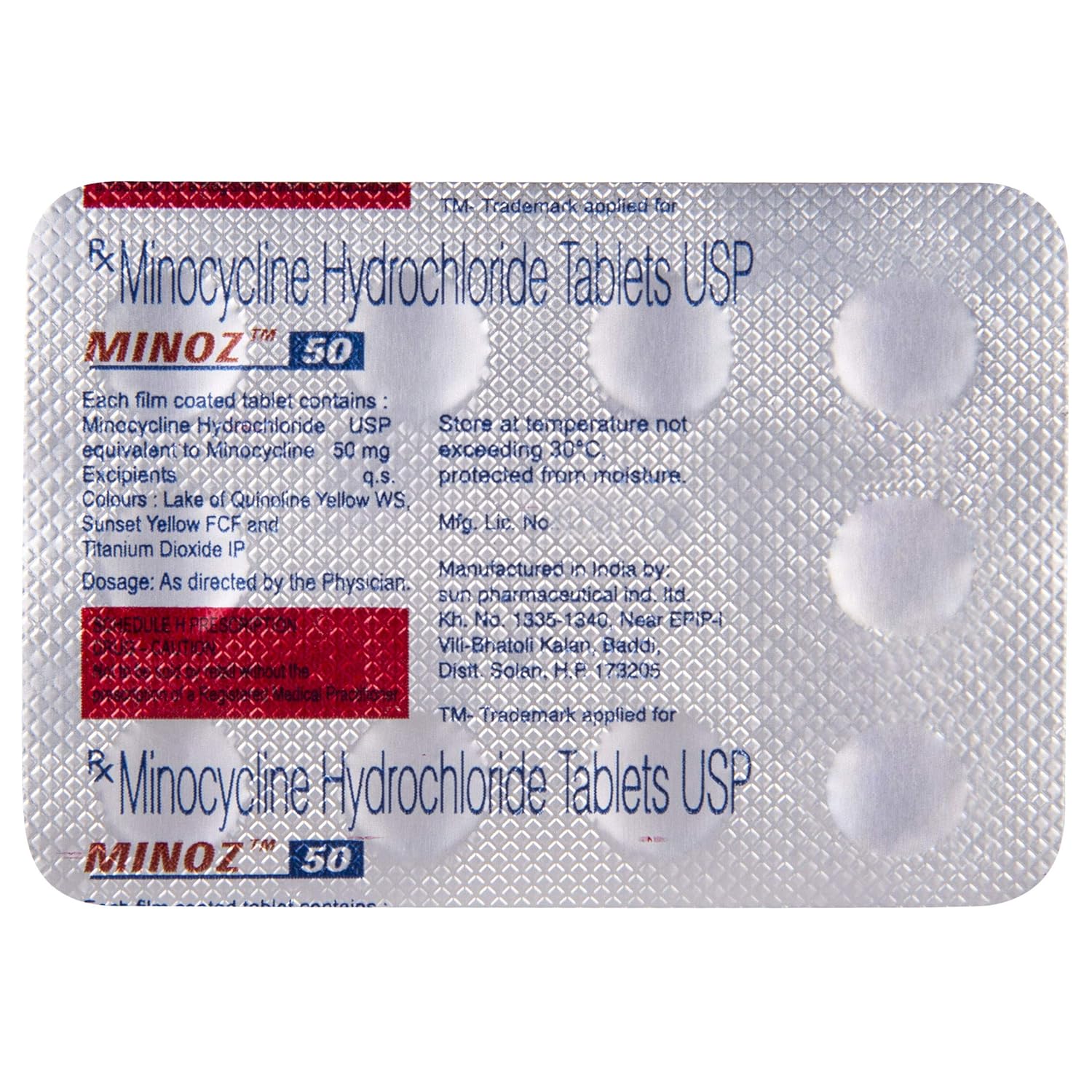
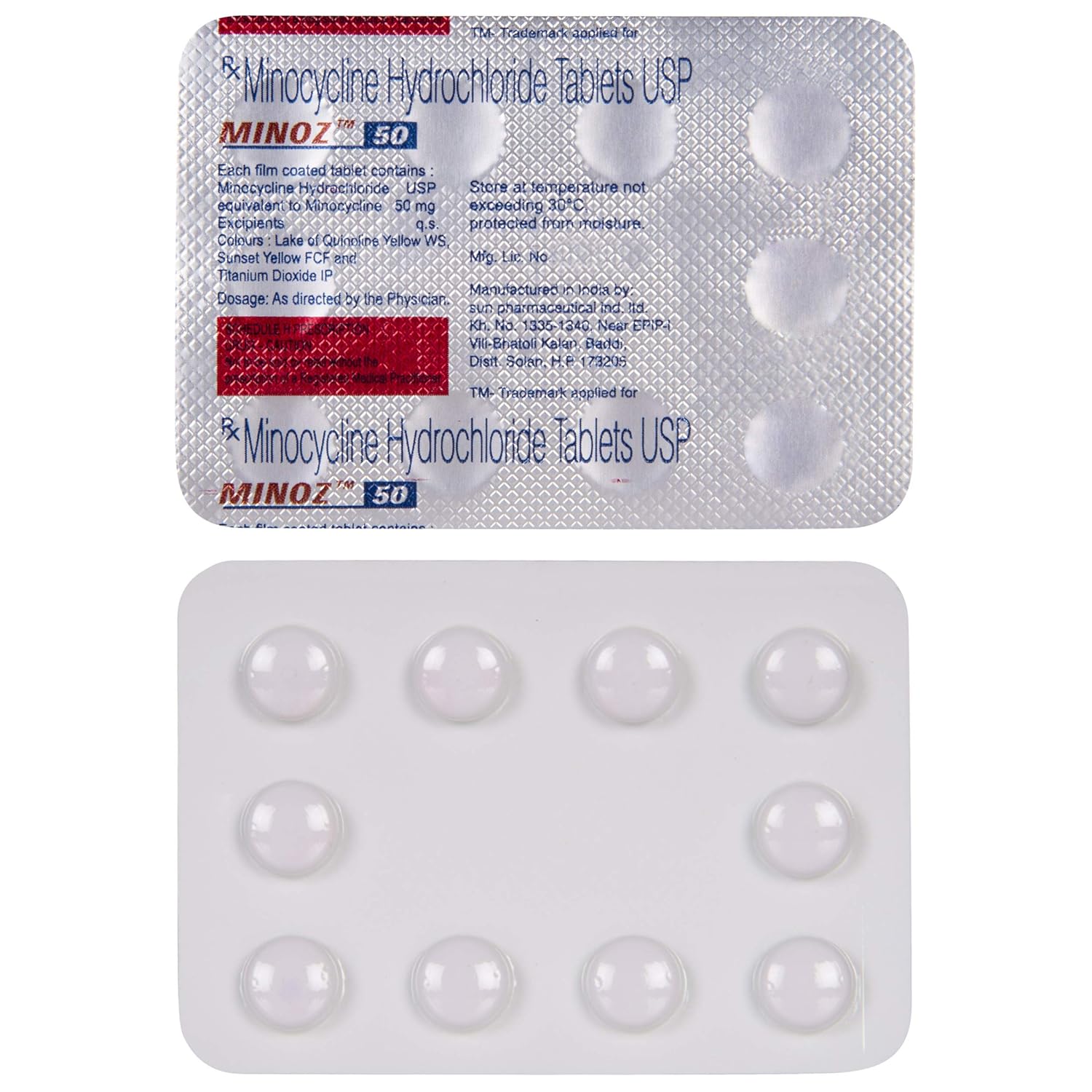
Minoz 50 (Minocycline 50 mg)
Minoz 50 is a prescription oral tablet that contains Minocycline Hydrochloride USP, therapeutically equivalent to Minocycline 50 mg. Minocycline is a broad-spectrum antibiotic belonging to the tetracycline class. It has bacteriostatic activity and is effective against a variety of Gram-positive and Gram-negative bacteria.
Minocycline was developed as a semi-synthetic derivative of tetracycline with improved absorption, extended half-life, and better tissue penetration. It became widely used because of these improved pharmacokinetics and its effectiveness in skin and soft tissue infections, particularly acne.
Minocycline works by inhibiting protein synthesis in susceptible bacteria. It binds to the 30S ribosomal subunit, blocking the attachment of aminoacyl-tRNA to the mRNA-ribosome complex. This prevents addition of new amino acids, halting bacterial protein production and bacterial growth.
Minocycline is active against:
-
Staphylococcus species (including some MRSA strains)
-
Streptococcus species
-
Haemophilus influenzae
-
Neisseria species
-
Acinetobacter
-
Some anaerobes
-
Certain atypical organisms like Chlamydia and Mycoplasma
The exact susceptibility profile varies with bacterial strain and geographic patterns of resistance.
Pharmacokinetics
-
Absorption: Well absorbed orally; food may slightly reduce absorption but helps tolerability.
-
Distribution: Widely distributed into body tissues and fluids; penetrates skin, lungs, and interstitial spaces well.
-
Metabolism: Partially metabolized in the liver.
-
Elimination: Excreted via urine and feces; a portion undergoes enterohepatic circulation.
-
Half-Life: Relatively long (≈11–22 hours), allowing once- or twice-daily dosing.
Clinical Uses
Approved Indications
Minocycline is prescribed for various bacterial infections when susceptible organisms are involved:
Acne Vulgaris
Minocycline is widely used for moderate to severe inflammatory acne. It reduces populations of Propionibacterium acnes (now Cutibacterium acnes) and decreases inflammation.
Skin & Soft Tissue Infections
Used for cellulitis, wound infections, and other localized bacterial infections.
Respiratory Tract Infections
For pharyngitis/tonsillitis, bronchitis, community-acquired pneumonia when bacteria are shown or suspected to be susceptible.
Other Infections
Certain sexually transmitted infections (e.g., chlamydial infections), urinary tract infections, and some tick-borne diseases.
Unapproved Uses (Off-Label)
Physicians may prescribe minocycline off-label for conditions such as:
-
Rosacea
-
Certain periodontal infections
-
Chronic obstructive pulmonary disease (COPD) exacerbations with bacterial component
-
Relapsing febrile illnesses caused by atypical organisms
These should be based on clinical judgment and evidence.
Dosage and Administration
General Principles
-
Follow physician’s prescription exactly.
-
Tablet may be taken with food or milk to reduce gastrointestinal upset.
-
Swallow tablets whole with water.
Typical Adult Dosage
For most systemic infections:
-
50–100 mg every 12 hours or
-
100 mg once daily depending on severity and clinical response.
For acne:
-
50–100 mg once or twice daily, often once daily for maintenance.
Pediatric Use
The pediatric dose is weight-based and used only when appropriate. Healthcare providers calculate based on mg per kg of bodyweight.
Renal or Hepatic Impairment
Dosing may require adjustments in patients with liver or kidney dysfunction. Monitor closely for toxicity.
Contraindications
Minocycline should not be used in:
-
Patients with known hypersensitivity to tetracyclines
-
Children under 8 years old (risk of tooth discoloration and bone growth inhibition)
-
Pregnancy (especially second and third trimesters) due to risk of fetal harm
-
Breastfeeding unless the benefit outweighs risk (discuss with clinician)
Warnings and Precautions
Photosensitivity
Patients may be more sensitive to sunlight; advise sunscreen and protective clothing.
Vestibular Side Effects
Dizziness, vertigo, and balance disturbances can occur; exercise caution when driving.
Hepatotoxicity
Rare but serious liver injury has been reported; monitor liver enzymes in at-risk patients.
Intracranial Hypertension
Symptoms may include headache, visual changes; discontinue if suspected.
Pseudomembranous Colitis
Antibiotic-associated colitis may occur; monitor for severe diarrhea.
Side Effects
Common (Mild)
-
Nausea or vomiting
-
Diarrhea
-
Dizziness
-
Headache
Less Common
-
Rash
-
Altered taste
-
Sun sensitivity
Rare but Serious
-
Severe liver injury
-
Blood disorders
-
Severe allergic reactions
-
Intracranial hypertension
Drug Interactions
Minocycline interacts with:
Minerals
Calcium, iron, magnesium, and aluminum (e.g., antacids) can reduce absorption if taken together. Separate dosing by several hours.
Oral Contraceptives
Effectiveness may be reduced; consider backup birth control.
Warfarin
May enhance anticoagulant effect; monitor INR.
Retinoids
Increased risk of intracranial hypertension with isotretinoin or other retinoids.
Special Populations
Pregnancy
Use only if clearly needed; risk of fetal harm (bone and tooth development).
Breastfeeding
Minocycline is excreted in breast milk; monitor infant for adverse effects.
Pediatrics
Important growth and tooth development considerations; avoid use under 8 years old unless necessary.
Geriatrics
Elderly patients may be more prone to vestibular effects and liver dysfunction; adjust dosing and monitor.
Monitoring and Follow-Up
Before Starting
-
Medical history
-
Allergies
-
Baseline liver and kidney tests if indicated
During Treatment
-
Monitor symptoms
-
Check for side effects
-
Periodic liver enzymes and renal function if prolonged therapy
Administration Tips
-
Do not lie down for at least 30 minutes after taking.
-
Do not take with milk or mineral supplements close to dose.
-
Complete full course even if symptoms improve.
Storage
-
Keep in cool, dry place
-
Away from moisture and heat
-
Keep out of reach of children
Patient Counseling Points
-
Take at the same time each day
-
Report severe side effects immediately
-
Use sun protection
Comparison with Other Antibiotics
Minocycline vs. Doxycycline:
-
Similar mechanisms
-
Minocycline has slightly better tissue penetration
-
Choice depends on infection type and susceptibility
Minocycline vs. Tetracycline:
-
Minocycline absorbed better with food
-
Longer half-life allows less frequent dosing
Resistance Considerations
Resistance patterns vary. Use based on culture results when possible. Avoid unnecessary antibiotic use to reduce resistance.
Alternate Brand Options
All contain the same active ingredient (Minocycline 50 mg):
-
Minolox 50 mg Tablet
-
Minima 50 mg Tablet
-
Mclin 50 mg Tablet
-
Nidcyclin 50 mg Tablet
-
Minopcy 50 mg Tablet
-
Minocidox 50 mg Tablet
-
CNN 50 mg Tablet
-
Divaine 50 mg Tablet
-
Diavaine 50 mg Tablet
(Plus many generics in various markets)
Brand selection should be discussed with your clinician or pharmacist.
Example Case Scenarios
Acne Vulgaris
Patient with moderate acne may be started on minocycline once daily; monitor improvement in lesions over 8–12 weeks.
Community-Acquired Pneumonia
Used based on susceptibility; typically higher dosing and combined with supportive care.
Frequently Asked Questions (FAQs)
Q: Can I take minocycline with food?
A: Yes, to reduce GI upset.
Q: Can I drink alcohol?
A: Alcohol doesn’t change drug activity, but avoid excess as it may worsen side effects.
Q: What if I miss a dose?
A: Take as soon as you remember; do not double dose.
Glossary
-
Bacteriostatic: Stops bacteria from multiplying
-
Half-life: Time for blood levels to reduce by half
-
Tetracycline class: A group of related antibiotics
Minoz 50 (Minocycline 50 mg) is a widely used antibiotic with broad indications, predictable pharmacology, and well-characterized safety. It is effective for many bacterial infections when used appropriately and under medical guidance.
📊 Alternate Brand List — Minocycline 50 mg Tablets
| Brand Name | Manufacturer / Typical Source | Notes |
|---|---|---|
| Minoz 50 Tablet | Sun Pharmaceutical Industries Ltd | Original reference brand. |
| DIAVAINE 50 mg Tablet | East India Pharmaceutical Works Ltd | Common low-cost alternative. |
| Mclin 50 mg Tablet | West Coast Pharmaceuticals Pvt Ltd | Widely available generic. |
| Nidcyclin 50 mg Tablet | Nidus Pharma Pvt Ltd | Generic formulation. |
| Minima 50 mg Tablet | Olcare Laboratories Pvt Ltd | One of the lower-priced options. |
| Minocidox 50 mg Tablet | Nuper Therapeutics | Generic substitute. |
| Minopcy 50 mg Tablet | Various manufacturers | Another generic brand. |
| CNN 50 mg Tablet | Ipca Laboratories Ltd | Common branded generic. |
| MINOLOX 50 mg Tablet | Micro Labs Ltd | Recognised branded alternative. |
| MI 50 mg Tablet | Eskon Pharma (or similar) | Generic alternative. |
| Minozid-50 Tablet | Laxian Healthcare (or similar) | Another market brand. |
| Cyomin 50 mg Tablet | Gary Pharmaceuticals Pvt Ltd | Listed as substitute. |
| Minolin 50 mg Tablet | Ochoa Laboratories Pvt Ltd | Generic alternative. |
| Nimolin 50 mg Tablet | Ochoa Laboratories Pvt Ltd | Variant naming. |
| Divaine 50 mg Tablet | Cipla Ltd | Well-known pharma brand. |

Reviews
There are no reviews yet.